
Use a WMS to Help Calculate Safety Stock
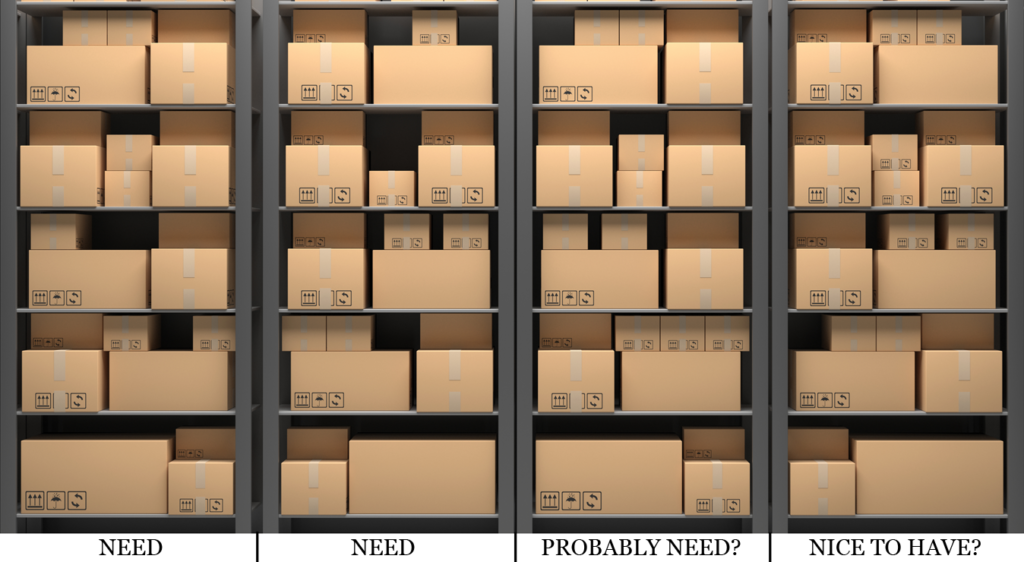
This past year we’ve been seeing warehouses carrying more safety stock to help offset supply chain disruptions. Safety stock is an extra “buffer” of inventory in the event demand increases unexpectedly and/or supply chain issues (like supplier delays, port problems, etc..) prevents you from replenishing one ore more items of inventory. There is a need for this cushion, as “stockouts” result in nearly a trillion dollars in lost sales worldwide every year. Service levels must remain high in our current environment of cutthroat competition, as any real drop-off can negatively affect your company’s reputation. BUT…and we all know there is always a “but”, too much safety stock increases carrying costs and certain types of products (high tech, perishables, etc…) could depreciate in value while gathering dust in storage. Please note that “Safety Stock” is different from “Working Stock”, which is basically the amount of inventory available to meet the expected demand during a specific timeframe.
A warehouse management system helps via:
- A WMS improves the things that you can control, to make it easier to focus on what you can’t
- The historical data behind inventory items can help forecast what is needed for the future
- The overall optimization and accurate reporting of what’s in the warehouse makes it easier to set aside adequate space for safety stock
- A WMS can help fill the variables in your safety stock calculation
Safety Stock = (max number sold per day X maximum lead time in days) – (average number sold per day X average lead time in days)
Let’s try this formula using an actual, real-world situation with a totally realistic product…So your warehouse backs up a Spoiled Egg Flavored Lip Balm outlet located nearby.

Your shop had a great day a few weeks ago thanks to a promotion and sold 137 tubes of balm, and you know that the longest time it would take to get a fresh shipment is 12 days. Now on your average day the store sells around 90 tubes, and the average lead time to get more is 7 days.
Let’s plug the numbers into our formula:
(137 tubes X 12 days) – (90 tubes X 7 days) = 1,014
Your warehouse should keep 1,014 tubes of Spoiled Egg Lip Balm as safety stock
While this formula can help determine an adequate safety stock level, keep in mind that it doesn’t take into account either supplier or logistical reliability. Also, seasonal shifts and – really supply and demand overall – is extremely dynamic these days. We also know that fickle customers could lose their taste for spoiled egg flavoring, and so you will need to keep the above formula up-to-date to maintain proper levels of safety stock.
How do you calculate safety stock? Drop us a line and we’ll compare notes.
This post was written by:

Recommended Content
How Middle East Instability Is Affecting U.S. Supply Chains
How Is Middle East Instability Affecting U.S. Supply Chains? Geopolitical instability in the Middle East is creating ripple effects across global supply chains, with U.S. businesses feeling the impact through higher energy costs, rising food prices, and increased...
How Teams Actually Adopt Continuous Improvement
In this episode of Rack and Roll: Future Proofing Your Warehouse, we explore what it really takes to turn continuous improvement from a one-time initiative into an everyday operational mindset. As AI, advanced analytics, and warehouse technology continue to evolve,...
Top 5 Reasons Supply Chain Leaders Should NOT Delay a WMS Upgrade
Modernizing your warehouse systems starts with understanding the hidden risks of waiting.If you are responsible for your company’s warehouse operations, you’ve probably had the same conversation more than once: “We know we need to upgrade our WMS…just not right now.” ...
What Grandma’s Cookie Recipe Can Teach Us About Supply Chains
How Do You Prevent Supply Chain Knowledge Loss? One of the biggest challenges facing supply chain and warehouse operations today is knowledge loss caused by employee turnover, retirements, and organizational change. When critical operational knowledge exists only in...
How 3PL Supply Chain Optimization Improves KPIs
A practical approach to improving performance, efficiency, and operational alignment across 3PL operations.For third-party logistics providers, operational performance is the product. Customers judge 3PLs on execution which includes how fast orders move, how...
